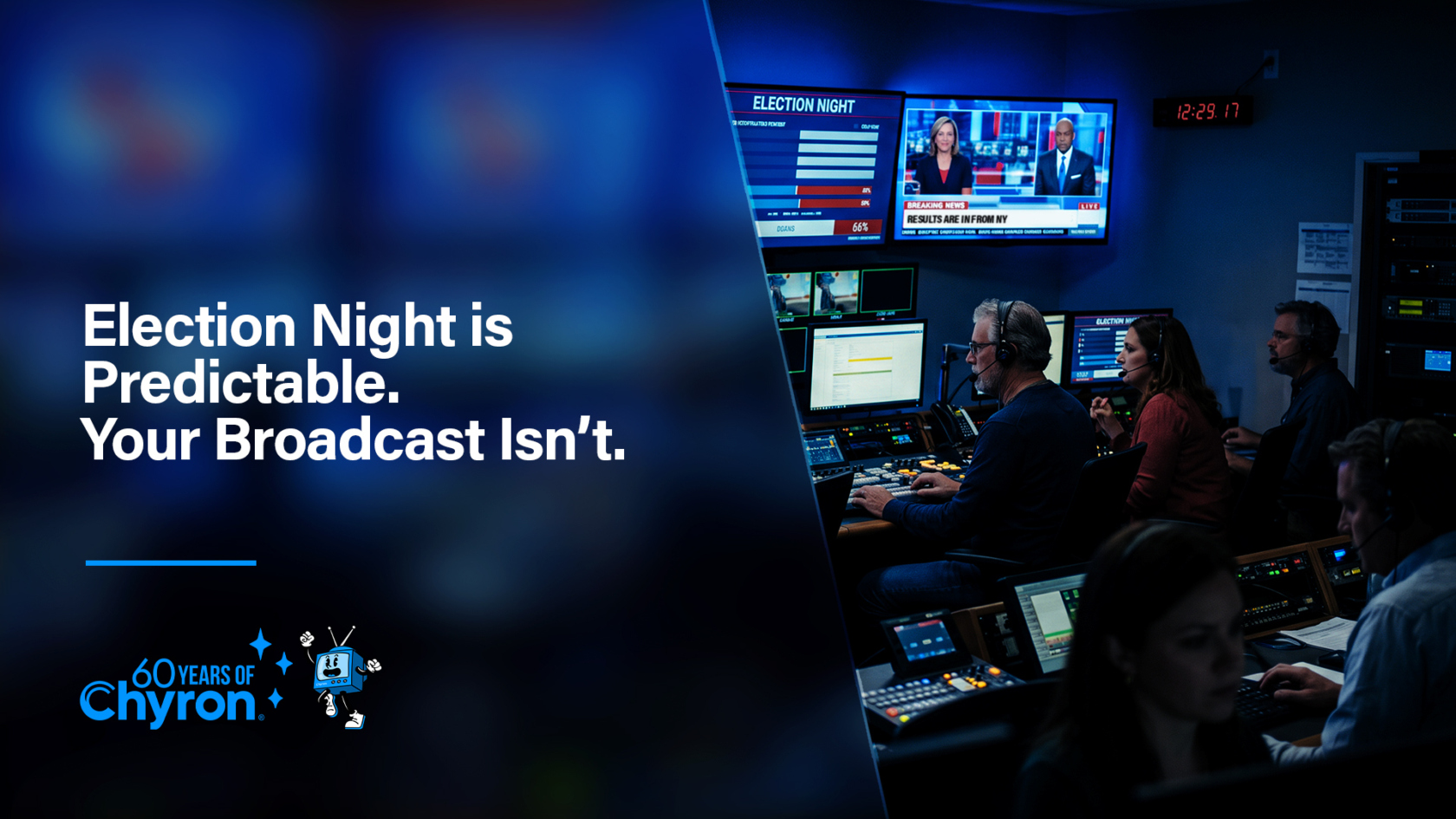
Election Night Is Predictable. Your Broadcast Isn’t.
Lessons From 60 Years of Live Production on Preparing for the Unexpected
As polls close on election night, the pressure builds in the control room. Graphics are ready for incoming results, producers track developing races, and news directors keep an eye on competing coverage. Every newsroom wants to bring viewers the latest information quickly. But every update, from a vote count to a projected winner, puts the station’s credibility on the line. The challenge is keeping pace without compromising accuracy.
For local stations, election night is the Super Bowl of live TV production. Preparation begins months in advance as teams develop graphics packages, build physical or virtual sets, and coordinate responsibilities so everyone knows their role. Yet even the most detailed plan can only account for so much. Successful election coverage depends on being ready for what no one can predict.
Even with just a couple of weeks until elections, there’s still time to identify workflow issues and address gaps in your coverage plan. After six decades in live production, Chyron understands what’s at stake when preparation meets the pressure of going live. We’ll explore how election coverage has evolved, where workflows can break down, and what your team can review now to respond with confidence when the unexpected happens.
Preparing Your Workflow for Election Night
More Data. More Outputs. Fewer Hands
Election coverage once relied on a largely manual process. Reporters gathered vote counts at precincts and called them in to the assignment desk, where the numbers were passed along for entry into on-air graphics. Getting results to viewers depended on direct communication and a series of clearly defined handoffs.
Today, a single election result can pass from a data provider through a feed connection, graphics template, rundown and playout system before reaching viewers. Automated data feeds help stations populate graphics and deliver updates across broadcast, social media and the web much faster. While this allows teams to produce more content in less time, it also gives leaner teams more connections to monitor. Delays or errors along the way can slow coverage and make it harder to keep results consistent across every output.
Protecting Accuracy Under Pressure
Two questions guide election coverage throughout the night. Is the data flowing, and is it correct? Teams need incoming results to keep viewers informed, but speed means little if those results are wrong. If a feed stops, coverage can stall. If an error appears on screen, the station may need to issue a public correction, putting its credibility at risk. With every cut-in and potential race call, teams return to those same checks to confirm the information is both current and accurate.
Test the Full Path From Data to Graphics
Use test data supplied by your election-data provider ahead of the event to confirm API access, monitor incoming results and check that graphics populate correctly. Define how those graphics will be triggered, whether through the rundown or manually by an operator, and rehearse that process before live coverage.
Keep a short support contact list accessible to everyone in the newsroom and control room. Include internal IT and graphics contacts, along with each vendor’s support team, so operators know where to turn when an issue arises.
Prepare Backup Sources and Manual Procedures
A backup plan helps keep results moving when the primary data source becomes unavailable. Options include secondary feeds, reporters at precincts and county offices, and procedures for manual data entry. Establish when to switch to a backup and who manages the transition. Whatever the source, the information must meet the same editorial standards before reaching viewers.
Define Editorial Responsibilities
Clear responsibilities are essential, especially when the pressure to call a race builds. Teams should know who approves each call, what statuses such as “too close to call” and “projected winner” mean, and who enters and verifies manual updates.
They also need a clear process for correcting information across every affected graphic and output. When a correction must be entered separately in multiple systems, inaccurate information can remain on screen longer, increasing the risk to the station’s credibility.
Graphics That Keep Pace With the Results
Accurate, timely results also need to be easy for viewers to follow. Every visual should present information clearly and maintain the station’s identity, from continuous tickers and graphics for live cut-ins to lower thirds, full screens, web and social content. As results change, those outputs need to stay aligned with the same verified data.
That consistency starts with flexible, thoroughly tested templates. Graphics designed months in advance need to accommodate different races, whether they feature two candidates or six. Template logic should allow layouts to adjust automatically as the data changes, keeping names, vote counts and other details readable. Testing those variations before election night helps teams catch issues that would otherwise require fixes during live coverage.
With those foundations in place, producers can select the appropriate graphic, add it to the rundown and have it populate with the latest available results. This reduces the need to retype numbers or adjust layouts while the broadcast is underway, giving teams more time to focus on the developing story. The goal is to shorten the time between a verified update and the moment viewers see it, while keeping every graphic clear and consistent.
Plan B Is Part of the Plan
Election coverage rarely runs entirely on the newsroom’s schedule. Preparing for both editorial changes and technical disruptions gives teams options when the broadcast takes an unexpected turn.
Adapt When the Schedule Shifts
A candidate’s speech may be delayed, leaving anchors with airtime to fill and producers adjusting the rundown. Having reserve stories, supporting graphics, maps, and talking points ready helps the team provide useful context and keep coverage moving while they wait.
Make the Switch With Confidence
The same preparation applies when technology interrupts the plan. If a data feed becomes unavailable, producers need access to graphics they can update manually, including full-screen results templates. Designate someone to handle those updates and make sure they have practiced using the tools before election night. Knowing where backups are, who operates them, and how to bring them to air helps producers give clear direction while coverage continues.
Where possible, keep backup procedures within the team’s familiar workflow. If switching to a separate system is necessary, rehearse that transition so the additional steps are understood before time becomes critical.
A contingency plan works best when the team knows how to put it into practice. Clear responsibilities, accessible resources, and familiar tools help everyone respond confidently when coverage takes an unexpected turn.
An Efficient Workflow Is Key
During high-pressure coverage, problems often emerge where one part of the workflow connects to another. Data feeds need to populate graphics reliably, graphics hubs need to distribute templates that local stations can test and use, and teams need to switch from automated graphics to manual updates while maintaining a consistent on-air look. Chyron helps connect these stages through solutions designed to work together, supporting a coordinated workflow from incoming data to on-air presentation.
The Chyron Ecosystem in Action on Election Night
Chyron’s solutions work together to connect election data with graphics and newsroom workflows. NewsTicker helps broadcasters manage incoming U.S. election results from sources such as the Associated Press, state and county election offices, and customer-provided feeds. It supports combining information from multiple sources for the same race, with manual adjustments when needed.
PRIME turns those results into full-screen comparisons, lower thirds and continuous tickers that help viewers follow competitive races and shifts in the balance of power. Teams can maintain a consistent visual identity across on-air graphics, studio displays and interactive presentations. CAMIO, Chyron’s MOS-driven graphics management system, manages access to editable graphics templates within the newsroom workflow. Producers can use those templates to prepare election graphics and add them directly to the rundown for playout.
To provide additional context to the coverage, AXIS supports the creation of maps that help viewers understand where races are unfolding. VSAR extends the storytelling into virtual studios and augmented reality, allowing presenters to explain election developments alongside graphics within the studio environment. Together, these solutions help teams turn changing results into clear, visually engaging coverage.
A connected ecosystem can reduce unnecessary handoffs and make workflows easier for teams to learn and manage. Incorporating backup procedures into that workflow gives teams automation when it helps and manual control when it matters. The goal is to help operators and producers work confidently under pressure, with familiar tools and a clear path forward when plans change.
Building that confidence takes practice and training. Chyron Academy offers free training on its solutions to help teams strengthen their skills as part of their ongoing preparation for demanding live coverage.
What to Check Before Election Night
You can’t predict every turn election night will take, but you can prepare your team to respond. Even in the final weeks, reviewing data sources, testing graphics and rehearsing backup procedures can reveal gaps while there’s still time to address them.
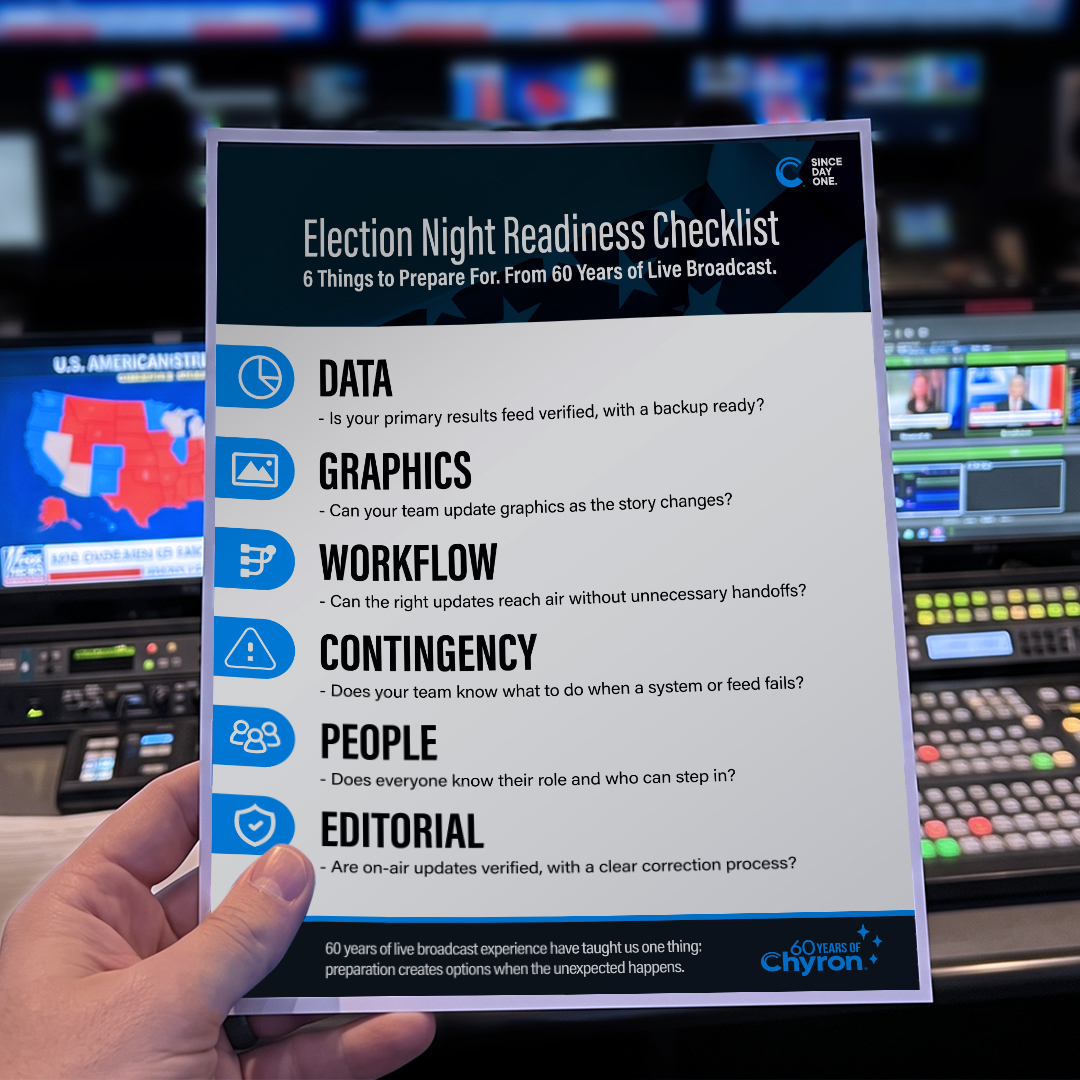
Drawing on six decades of live production experience, Chyron’s Election Night Readiness Checklist helps teams review six essential areas: data, graphics, workflow, contingency plans, people and editorial decisions. Download the checklist to guide your final preparations and confirm everyone knows what to do when the plan changes.
Election night is not the time to discover your workflow.